
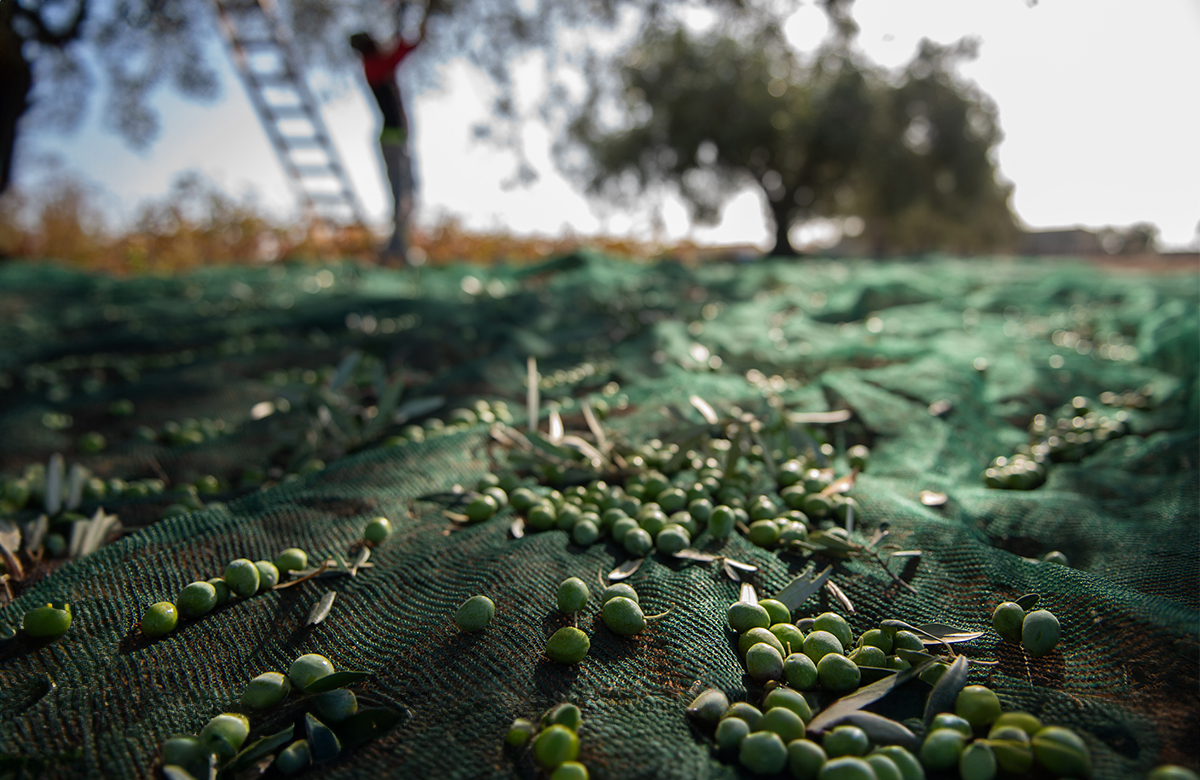
Olive oil production in Italy for the 2024/25 olive oil campaign stops at 224,000 tons. The figure (estimated by Ismea) shows an overall drop of 32 percent compared to last year, with very diversified trends in the different Italian macro-regions. In fact, if the harvest is going very well in the North and Center, which respectively put up +75% and +70% compared to 2023, the South reports losses averaging 41%, with peaks of 50% in Puglia.
According to findings from the National Agricultural Information System (SIAN), yields were particularly low in the first phase of the harvest, below average especially in the Center-North. Due to climate change and an increasingly early harvest aimed at safeguarding quality, about 13 kilos of oil were in fact extracted from a quintal of olives in October, less than 15 percent on average of the Italian yield during the same period last year. Specifically, in October all of northern Italy records yields of less than 10 percent, then rising as we move down the boot, to 11-12 percent in Abruzzo and Campania. Higher average yields are recorded in Apulia (from 12 percent in Lecce to 15 percent in Bari) and Sicily (12 percent in Catania and 16 percent in Palermo), while the record belongs to Calabria with a minimum of 14 percent in Crotone and a maximum of 17 percent in Catanzaro (SIAN data).
In the absence of complementary sources of income to oil, lower yields lead to higher production costs. Indeed, 87 percent of the olive becomes a waste to be disposed of at the expense of olive growers and millers. On the other hand, there are numerous possibilities for valorizing these residues. If olive kernels can produce energy at home (pellet boilers) and for large plants (biofuel), olive pomace can be used as feed for farm animals, improving the quality of milk and meat (University of Perugia research, on Frontiersin.org and Publish.csiro.au) or to make road surfaces more sustainable (pilot project in Spain), while the biophenols in olive mill vegetation water can be used in cosmetics, the food industry and pharmaceuticals.
And it is precisely the versatility of the olive that will be the focus of Sol2Expo (Veronafiere, March 2-4, 2025) for a Full Olive Experience that ranges from the raw material to the reuse of olive-olive by-products, and makes innovation its cross-cutting feature.